

Understanding Seasickness (And How to Prevent It)
The first step to beating seasickness is understanding what it actually is. Even though it affects your stomach, it starts in your inner ear. Seasickness is simply a sensory disconnect: your eyes see a stationary boat, but your inner ear feels the motion of the ocean.
Your body isn’t actually sick—it’s just a little confused! Once you know this, it’s much easier to take control. If you start to feel out of balance, you can often cure yourself quickly with a few simple tricks.
Getting Your “Sea Legs” on the Boat
- Stay low and to the stern (back) of the boat. Think of the boat like a flagpole in the wind. The top of the pole (the bow/front and upper decks) sways wildly, while the bottom of the pole (the stern/lower decks) barely moves.
- Look at the horizon. Find a fixed point in the distance. This helps your eyes and your inner ear get back on the same page.
- Roll with it. Take deep breaths, relax your shoulders, and try to sway with the boat instead of subconsciously stiffening up to fight the motion.
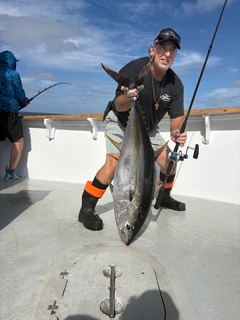
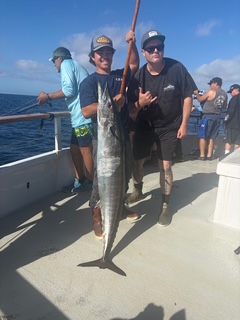
- Stay distracted. Keep your mind busy! (A nice tuna on the end of your line is a fantastic cure for an upset stomach.)
Preventative Medications & Remedies
Disclaimer: We are fishing experts, not doctors. Always check with your physician before trying new medications.
- Scopolamine Patch (Transderm Scop): A highly effective prescription patch worn behind the ear. It’s usually easy to obtain with a quick call to your doctor. Dry mouth is the most common side effect.
- Bonine (Meclizine): Our favorite over-the-counter option. It causes less drowsiness than other brands. Pro-tip: For it to be fully effective, get it in your system 8 hours before boarding. Take a dose right before bed the night before, and take another when you board.
- Acupressure Wristbands: These work wonders for some people and are completely drug-free.